

Blog
Somalia’s Livestock Sector Can Power Long-Term Development. Here’s How
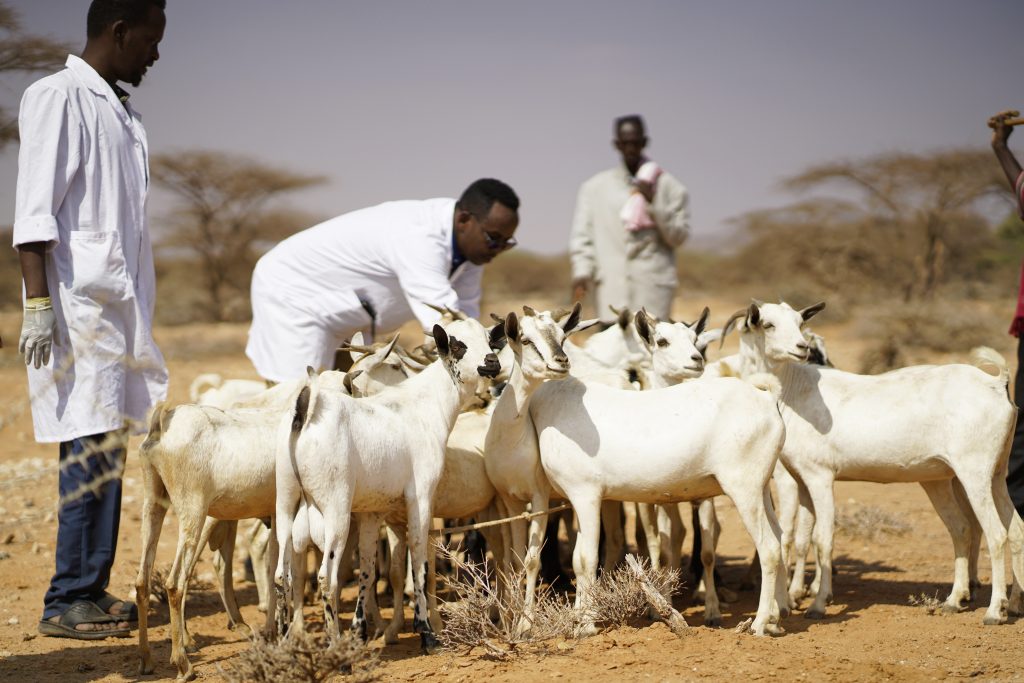
Photo credit: FAO
Despite climate shocks, market volatility, and structural gaps, the sector remains a pillar of national growth.
Through more than three decades of conflict, political upheaval, and deepening climate crisis, one part of Somalia’s economy has remained remarkably intact: livestock.
Built on the movement of nomadic herders, the resilience of pastoral communities, and trading networks that survived even in the absence of a functioning state, the sector has long been the backbone of national life. While other sectors faltered, livestock kept moving across rangelands, through markets, and out of Somali ports to the wider region.
Livestock remains the central pillar of economic activity, contributing the largest share to production value, domestic consumption, exports, and employment. Somalia has one of the largest livestock populations in Africa, estimated at 56 million head of camels, cattle, sheep, and goats.
In 2024, livestock exports, including live animals, meat, and skins, reached an estimated US$1.03 billion. The overall livestock population has been growing steadily, accompanied by an upward trend in export earnings, accounting for 66% of total goods exports and 28% of total exports of goods and services and contributes about 10% of GDP.
Markets in Galkayo and Burao anchor trade in the north and center, while Beledweyne links inland communities to the south. From there, animals move toward ports such as Bosaso and Berbera, which handle the bulk of exports to markets in the Gulf.
Demand for Somali livestock, prized for its affordability and compliance with religious slaughtering standards, peaks dramatically during the annual Hajj pilgrimage. Millions of goats and sheep are shipped to Saudi Arabia, Oman, Qatar, and the United Arab Emirates (UAE) which together account for 90% of Somalia’s livestock exports.
Yet beneath this success lies a system under severe strain.
Somalia’s overwhelming dependence on a handful of Middle Eastern markets makes it dangerously exposed to external decisions beyond its control. Animal health concerns, shifting regulations, or political tensions can quickly disrupt exports and household incomes across the country.
Saudi Arabia, Somalia’s largest buyer, has repeatedly imposed import bans over animal health concerns. One of these bans lasted nine years and another from 2016 to 2022. The latter coincided with a historic drought that killed an estimated 6.4 million animals and wiped out hundreds of millions of dollars in household wealth. Together, export restrictions and climate disasters revealed how fragile even Somalia’s most resilient sector can be.
Climate change poses the greatest long-term threat. Somalia now experiences some of the most frequent and severe drought cycles in the world. When rains fail, pasture disappears, water sources dry up, and livestock weaken or perish.
The 2017 drought alone caused losses exceeding US$350 million in animal deaths. For families that depend on herds not just for income but for food and survival, these losses are catastrophic. Women, who play a central role in milk production and small-stock management, are especially affected when herds collapse.
Infrastructure remains another major bottleneck. Most of Somalia’s livestock is exported live, reflecting the lack of modern slaughterhouses, cold storage, and meat-processing facilities. Without a reliable cold chain, Somalia cannot participate in the high-value global trade in processed meat or capture the higher margins that come with value-added products.
The paradox is stark. Somalia is the world’s largest producer of camel milk, yet most of its dairy products are imported due to the absence of industrial-scale collection, pasteurization, and packaging facilities. The country imports more than $200 million worth of dairy products each year mainly powdered milk from the Gulf and East Africa.
Animal health systems are equally underdeveloped. Most quarantine facilities at ports are privately operated and are focused on export compliance rather than national disease control. Without stronger diagnostics, surveillance, and vaccination campaigns, future trade bans remain a permanent risk.
And yet, the sector remains one of Somalia’s greatest economic opportunities. With the right investment, the country could shift from raw exports to becoming a regional leader in processed meat, dairy, and leather goods. Modern abattoirs and cold chains could open new markets in Africa, Asia, and Europe while reducing risky dependence on the Gulf. Expanded dairy processing could unlock the immense economic value of camel and cow milk, already worth billions in informal trade.
Government efforts are beginning to improve regulation, disease monitoring, and coordination with the private sector. Development partners are also supporting transformation.
The International Fund for Agricultural Development (IFAD) is expanding access to finance for Somali herders and traders, while The World Bank and the United Nations Development Programme (UNDP) are piloting initiatives such as DRIVE, which introduces drought insurance and regional trade infrastructure across the Horn of Africa.
What makes Somalia’s livestock sector exceptional is not only its scale, but its endurance. For centuries, Somali pastoralists have adapted to extreme environments, shifting borders, and volatile markets with extraordinary ingenuity.
“For millions of Somali families, livestock is more than income or food. It is a source of survival and dignity. It is the single most resilient system in our economy and the foundation of rural life,” said Mohamed Ibrahim, a Senior Analyst at the Somali Development and Reconstruction Bank (SDRB). “With the right investment from government, SDRB, and other partners, the sector can move beyond survival and become a driver of long-term economic growth and stability,” he added.